The Year That Was

The year 2025 will likely be remembered not as a year of sudden rupture but as a year when the world finally accepted that instability was no longer temporary. What had once been described as crises began to feel like conditions. Conflict did not shock. Climate did not surprise. Technology did not amaze. Instead, these forces settled into daily life, shaping decisions quietly and persistently, the way weather shapes architecture over generations.

International conflict remained the most visible marker of the age. The war in Ukraine continued into another year with no decisive resolution, its consequences extending far beyond the battlefield. Grain supply disruptions affected food prices in Africa and the Middle East. Energy markets in Europe adjusted again, relying less on Russian supply and more on fragile alternatives. What stood out in 2025 was not escalation but endurance. The war became a test of economic stamina, political patience, and public attention. As Thucydides observed long ago, prolonged conflict does not merely destroy cities; it reshapes character. By this year, the reshaping was evident across alliances and institutions.
The situation in Gaza and the wider Middle East remained a defining moral and diplomatic challenge. Civilian casualties, humanitarian access, and ceasefire negotiations dominated international forums. Despite repeated diplomatic efforts by the United Nations, regional actors, and global powers, violence recurred in cycles that felt tragically familiar. What distinguished 2025 was the erosion of language itself. Words like restraint and concern were used so often that they lost weight. The world knew what was happening. The problem was not awareness but action. As Hannah Arendt warned, the danger of modern tragedy is not ignorance but normalization.
Major elections across the world reflected a shared fatigue. In several democracies, voters turned away from grand ideological promises and toward messages of control, order, and economic security. This was not a global swing in one political direction but a global narrowing of expectations. Governments were judged less on vision and more on competence. The social contract felt thinner, transactional rather than aspirational. The belief that politics could transform society gave way to the hope that it might at least prevent collapse.
Economic pressures remained central to public life. Inflation eased in some economies, but living costs remained high. Housing shortages affected cities from Europe to Asia. Youth unemployment persisted in parts of the Global South while automation reshaped labor markets elsewhere. These were not abstract trends. They influenced migration, delayed family formation, and intensified social frustration. Adam Smith wrote that economic systems exist to serve human welfare. In 2025, many people quietly wondered whether the system still remembered that purpose.
Climate change asserted itself not through theory but through consequence. Extreme heat events set new records across multiple continents. Flooding displaced communities in South Asia while prolonged drought strained agriculture in parts of Africa and Latin America. The scientific consensus had long been clear. What changed in 2025 was the political framing. Climate adaptation received more attention than prevention. Governments invested in resilience infrastructure not because emissions debates were resolved but because damage was unavoidable. At the COP30 summit in Brazil, climate finance and adaptation dominated discussions, reflecting an acceptance that the future had already arrived unevenly.
Technology continued to accelerate, particularly in the field of artificial intelligence. By 2025, AI systems were integrated into education, healthcare, law, and governance. The European Union began enforcing aspects of its Artificial Intelligence Act, setting global precedents for regulation. Debates over transparency, bias, and accountability intensified. The concern was no longer whether machines could perform complex tasks but whether societies could govern their use without eroding trust. In Plato’s Phaedrus, writing itself was once criticized for weakening memory. In 2025, the question was whether delegation of thought would weaken responsibility.
Information ecosystems remained fragile. Deepfakes, misinformation, and algorithmic amplification challenged journalism and public discourse. Trust became a scarce resource. People relied increasingly on smaller circles, familiar voices, and personal networks to interpret reality. This fragmentation did not lead to silence but to parallel narratives that rarely intersected. The idea of a shared public truth felt strained. George Orwell warned that control of truth precedes control of people. In this year, truth was not controlled so much as diluted.
Global institutions faced mounting pressure. The United Nations struggled to assert authority in conflicts where veto power limited action. International law appeared selective in its enforcement. Smaller states questioned whether rules based order still protected them. Yet despite criticism, these institutions did not collapse. They persisted, imperfect but necessary. As with ancient Roman law in its later years, legitimacy weakened but structure endured because no clear alternative existed.
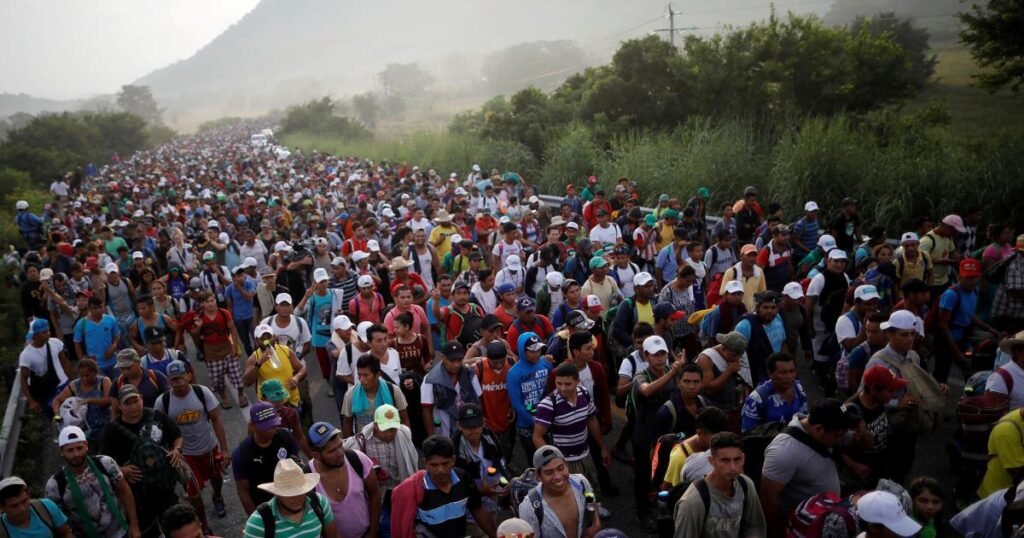
Amid these large forces, human responses remained deeply personal. Migration continued as people moved not only away from violence but toward possibility. Cultural production reflected anxiety and longing. Literature, cinema, and music explored themes of memory, loss, and identity. There was renewed interest in classical texts not as academic exercises but as survival manuals. Stoic philosophy gained popular attention not because it promised happiness but because it offered endurance.
We borrowed courage from the dead
because the living were exhausted
and still the sun rose without apology
What made 2025 distinct was not despair but sobriety. Optimism did not disappear, but it matured. People no longer expected rescue. They focused on repair. Communities organized locally when global solutions stalled. Mutual aid filled gaps left by institutions. These efforts rarely made headlines, but they sustained daily life.
The year forced a quiet reckoning with scale. Many problems proved too large for individual action yet too urgent for abstraction. This tension produced discomfort but also honesty. The world stopped pretending that complexity could be simplified without cost. As Ecclesiastes reminds us, there is a time to build and a time to endure what has already been built.
By the end of 2025, there was no clear victory to celebrate and no singular disaster to mourn. Instead, there was continuity marked by awareness. Humanity did not solve its greatest problems, but it learned their weight. History may record this year as transitional, not because it changed everything, but because it changed how seriously we understood what had already changed.
The future did not arrive with fire
it arrived with receipts
and asked us to read carefully
If the year taught anything, it was this. The world does not end when certainty fades. It continues, more cautiously, more honestly, and with a deeper understanding that progress is not guaranteed but responsibility is.